Water is the peril you are most likely to actually meet. Across 2018–2022, water damage and freezing accounted for 23.4 percent of homeowners insurance losses — roughly one in every sixty insured homes filing a claim each year, at an average of about $13,954. Wildfire and hurricane dominate the news; a failed supply line under the sink is what most people are eventually paid for.
It is also the peril where coverage is least understood, because the word water covers four different things and only some of them are in your policy.
Sudden and accidental discharge — a burst supply line, a failed water heater, a dishwasher hose that lets go while you are out. This is covered by a standard homeowners policy, and it is the single most common claim there is.
Gradual leakage — the slow drip behind the wall that has been going for months before anyone noticed. This is usually excluded, as repeated seepage or as wear and tear. Same appliance, same water, opposite outcome, and the difference is only how fast it happened.
Sewer and drain backup — water coming back up through the drains rather than down from the pipes. Excluded by default on most policies. It is restored by a water backup endorsement, which is among the cheapest useful things you can add.
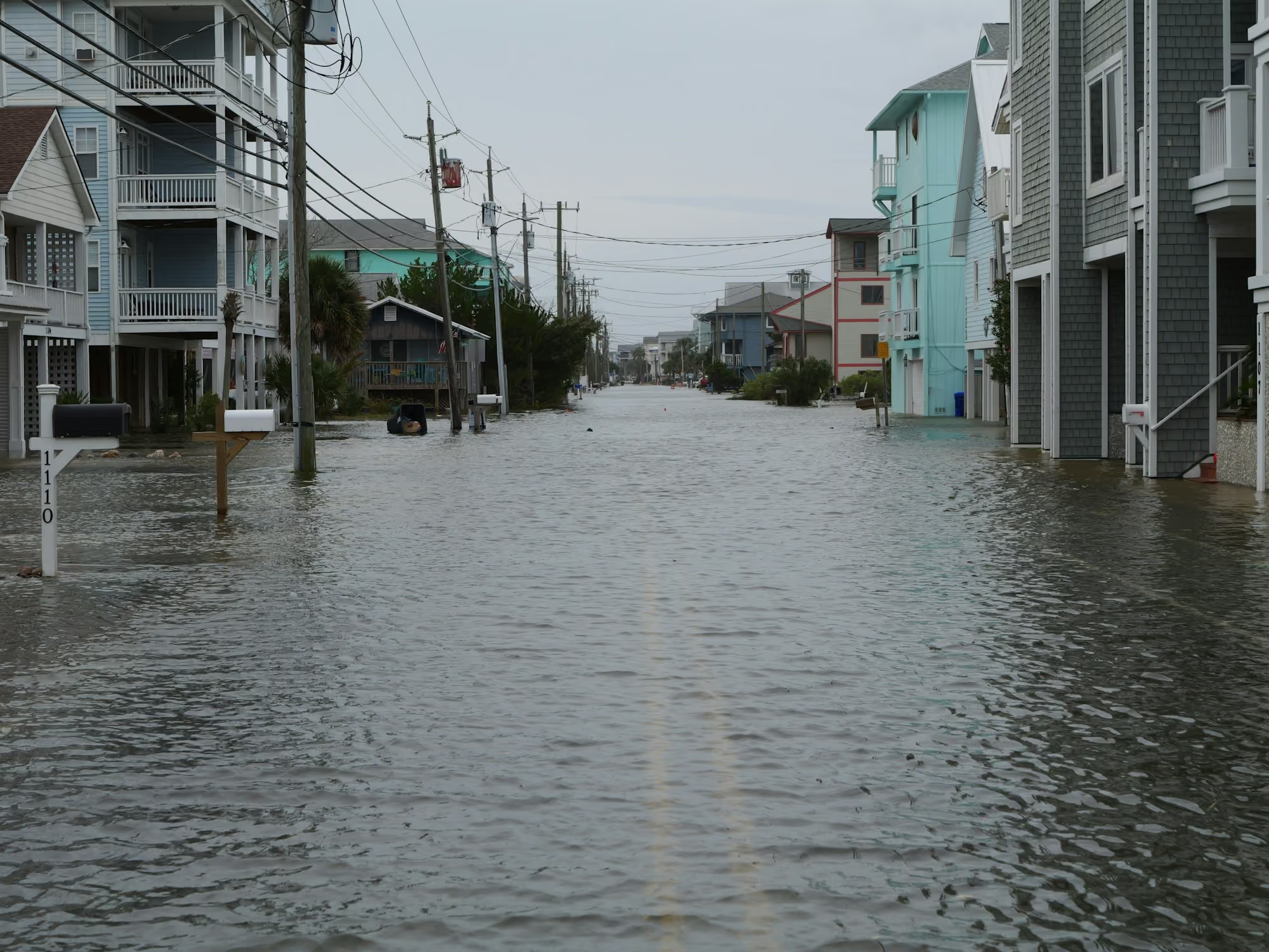
Flood — water that arrives from outside and from the ground up. Storm surge is flood. A creek over its banks is flood. Street flooding is flood. No homeowners policy has ever covered it.
When an adjuster looks at a water claim, the question is almost never whether water damaged the house. It is how long the water had been doing it. A pipe that burst on Tuesday is a covered loss. The same pipe weeping since spring is maintenance.
That is why the practical advice on water is unglamorous: know where your shut-off is, replace braided supply lines before they are twenty years old, and do not ignore a stain that is slowly getting bigger. The policy rewards you for catching it early, and penalises you for not.
Mould, fungus and wet rot are typically covered only as a consequence of an otherwise covered water loss, and then only up to a sublimit that is far below your dwelling limit. The limit varies by carrier and by state, and it is worth reading rather than assuming — remediation is expensive and the cap is often reached.
Flood coverage comes from the National Flood Insurance Program or from a private flood carrier, never from the homeowners policy. It carries its own waiting period, so it cannot be bought once a storm has a name.
The common objection is “I am not in a flood zone.” The National Association of Insurance Commissioners puts more than 20 percent of NFIP claims as coming from outside high-risk flood areas. Being outside the mapped zone means the lender does not require flood insurance. It does not mean water cannot reach the house.
On the coast this matters twice over. After a named storm, wind damage and flood damage are settled by two different policies and frequently two different carriers, and the argument over which one caused what is the argument that delays payment.
Whether you carry a water backup endorsement, what your mould sublimit actually is, whether you hold a separate flood policy, and — on an older home — whether ordinance or law coverage is there to pay for rebuilding a wet bathroom to current code rather than to how it was built in 1974.
Most people find out at claim time. Send us your declarations page and we will tell you before then — what triggers your deductible, what it works out to in dollars, and what is missing.
Send your policyAlmost every expensive surprise on a property policy traces back to one of these. Each guide is written once and kept current, because the mechanics do not change by ZIP code even when the pricing does.
Most people find out at claim time. Send us your declarations page and we will tell you before then — what triggers your deductible, what it would cost, and what is missing.
Independent insurance guidance for your home, your business, and your life across state lines.